How Effective Is MOTS-c Peptide Therapy for You?
A guide to how effective MOTS-c peptide therapy is for individual patients. Covers what MOTS-c is and how it works through mitochondrial function enhancement, its role in metabolic regulation via AMPK activation, physician supervision for therapy safety, metabolic and energy benefits (increased energy, glucose control, enhanced endurance), results timeline (initial energy improvements in 2-4 weeks, full benefits in 8-12 weeks), clinical evidence for exercise performance, weight management support and individual variability, MOTS-c's impact on weight loss and metabolic health, personalized dosing for optimized outcomes, healthy aging and anti-aging mechanisms through the Folate-AICAR-AMPK pathway, and safety considerations.
MOTS-c peptide therapy is emerging as a promising approach for enhancing metabolic health and energy levels. This article explores the effectiveness of MOTS-c therapy, its mechanisms, benefits, and the clinical evidence supporting its use.
What Is MOTS-c Peptide Therapy and How Does It Work?
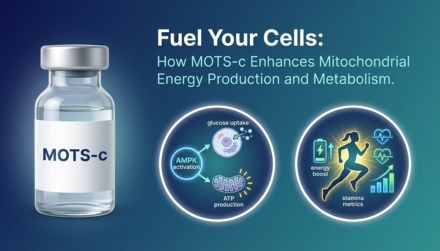
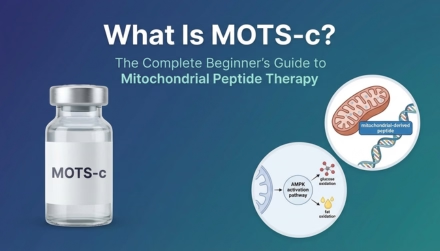
MOTS-c peptide therapy involves the administration of a mitochondrial-derived peptide that plays a crucial role in metabolic regulation. This peptide works by enhancing mitochondrial function, essential for energy production in cells. By improving mitochondrial efficiency, MOTS-c therapy can lead to increased energy levels and better metabolic health.
MOTS-C peptide is a mitochondrial-derived peptide that plays a crucial role in cellular energy metabolism and longevity. This powerful peptide helps regulate glucose metabolism, enhance insulin sensitivity, and promote healthy aging processes. Research shows MOTS-C may support weight management, improve exercise performance, and protect against age-related metabolic decline.
What Is the Role of MOTS-c in Metabolic Regulation?
MOTS-c is integral to metabolic regulation, primarily through its activation of AMP-activated protein kinase (AMPK). This activation enhances glucose uptake and promotes a balanced metabolic state. By influencing these pathways, MOTS-c helps maintain energy homeostasis and supports overall metabolic health.
| Category | Detail | What to Expect |
|---|---|---|
| Benefit -- Energy | Increased energy levels and vitality | Initial improvements in 2-4 weeks |
| Benefit -- Glucose Control | Better blood sugar regulation via AMPK | Progressive improvement with therapy |
| Benefit -- Endurance | Improved physical performance | Enhanced during exercise; ongoing gains |
| Timeline -- Initial | Energy level improvements | 2-4 weeks after starting treatment |
| Timeline -- Full Benefits | Metabolic optimization and sustained improvements | 8-12 weeks depending on individual factors |
| Factor -- Dosage | Personalized dosing protocol | Tailored to metabolic profile and goals |
| Factor -- Metabolism | Individual metabolic response varies | Results differ person to person |
| Factor -- Adherence | Consistency with treatment plan | Better adherence leads to better outcomes |
What Are the Metabolic and Energy Benefits?
- Increased Energy Levels: Users often report improved energy and vitality, making daily activities more manageable.
- Better Glucose Control: MOTS-c helps regulate blood sugar levels, crucial for metabolic health.
- Enhanced Endurance: Many individuals experience improved physical performance and endurance during exercise.
How Does MOTS-c Improve Metabolic Function and Energy Levels?
Initially, users may notice increased energy levels within a few weeks of starting treatment. As therapy continues, metabolic optimization occurs, leading to sustained improvements in energy and metabolic function. Full benefits may take several weeks to manifest, depending on individual factors such as lifestyle and adherence to the treatment protocol.
What clinical evidence supports MOTS-c's effects on exercise performance?
Clinical evidence is still emerging. Preclinical studies show promising results indicating MOTS-c can enhance physical performance and endurance. User reports suggest positive outcomes, though extensive human clinical trials are still needed to solidify these claims.
Can MOTS-c effectively support weight management?
MOTS-c has shown potential in supporting weight management. Preclinical studies indicate it may influence metabolic pathways regulating fat storage and energy expenditure. Individual variability plays a significant role, and results may differ from person to person.
How does personalized dosing influence outcomes?
Individual responses vary widely, making tailored dosing essential. Research indicates personalized approaches may lead to improved outcomes. Understanding individual metabolic profiles enhances the effectiveness of MOTS-c therapy.
How does MOTS-c contribute to healthy aging?
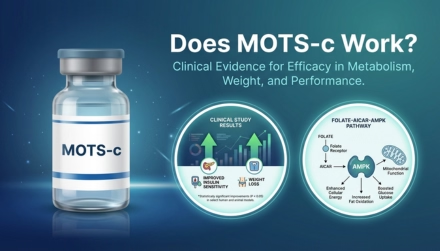
MOTS-c enhances metabolic regulation, counteracting age-related declines in energy and metabolic function. It improves insulin sensitivity and supports mitochondrial health through the Folate-AICAR-AMPK pathway, which is particularly relevant for older adults maintaining vitality.
Is MOTS-c therapy safe and what are the side effects?
Generally considered safe under physician supervision. Commonly reported side effects include mild GI discomfort and transient changes in energy levels. Consulting with a healthcare provider addresses concerns and ensures the therapy is appropriate.
How long does it take to see results from MOTS-c therapy?
Many users report initial improvements in energy levels within 2-4 weeks. Full benefits may take 8-12 weeks depending on dosage, individual metabolism, and adherence to the treatment plan. Setting realistic expectations is important.
What Is the Impact on Weight Loss and Metabolic Health?
Preliminary findings suggest MOTS-c can help address metabolic dysfunction linked to obesity. Reported benefits include improved insulin sensitivity and enhanced metabolic flexibility. The timeframe for observing effects varies -- some individuals experience changes within weeks, while others take longer.
MOTS-c Prevents Obesity & Insulin Resistance
MOTS-c treatment in mice prevented ovariectomy-induced obesity and insulin resistance. MOTS-c treatment increased brown fat activation and reduced OVX-induced fat accumulation and inflammatory invasion in white adipose tissue. Moreover, MOTS-c activated AMPK pathway to improve energy dissipation and insulin sensitivity. In conclusion, MOTS-c is a high potential candidate for chronic treatment of menopausal induced metabolic dysfunction.
-- MOTS-c peptide regulates adipose homeostasis to prevent ovariectomy-induced metabolic dysfunction, 2019
| Category | Detail | Guidance |
|---|---|---|
| Weight -- Mechanism | Influences fat storage and energy expenditure pathways | Individual variability affects outcomes |
| Weight -- Evidence | Prevented obesity; brown fat activation in animal models | AMPK pathway improvement confirmed |
| Aging -- AMPK | Promotes cellular energy production; reduces oxidative stress | Counteracts age-related metabolic decline |
| Aging -- Exercise Mimetic | Helps maintain muscle mass and metabolic health | Supports healthy aging and vitality |
| Safety -- Side Effects | Mild GI discomfort; transient energy changes | Generally safe under physician supervision |
| Safety -- Monitoring | Regular check-ins and dosage adjustments | Ensures appropriate and effective therapy |
| Access -- Treatment | Consultation, personalized dosing, ongoing monitoring | Physician-supervised throughout |
| Access -- FSA/HSA | May be eligible depending on plan | Verify with provider |
How Does MOTS-c Contribute to Healthy Aging?
MOTS-c may play a significant role in promoting healthy aging by enhancing metabolic regulation and counteracting age-related declines. Its ability to improve insulin sensitivity and support mitochondrial health is particularly relevant for older adults.
MOTS-c Mechanisms: Metabolism, Insulin & Aging
MOTS-c is a peptide encoded by the short open reading frame of the mitochondrial 12S rRNA gene. It is significantly expressed in response to stress or exercise and translocated to the nucleus, where it regulates the expression of stress adaptation-related genes with antioxidant response elements (ARE). MOTS-c mainly acts through the Folate-AICAR-AMPK pathway, thereby influencing energy metabolism, insulin resistance, inflammatory response, exercise, aging and aging-related pathologies.
-- Mitochondria-derived peptide MOTS-c: effects and mechanisms related to stress, metabolism and aging, 2015
Anti-Aging Mechanisms
The anti-aging mechanisms of MOTS-c are linked to its role in mitochondrial function and metabolic regulation. By activating AMPK, MOTS-c promotes cellular energy production and reduces oxidative stress. Its exercise-mimetic effects help maintain muscle mass and metabolic health, further supporting healthy aging.
Physician-Supervised Treatment
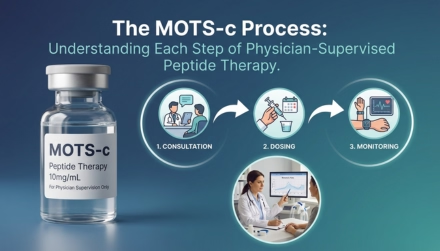
The process involves consultation to assess health status and treatment goals, personalized dosing protocol development, and ongoing monitoring to adjust treatment as needed. Personalized plans include medical history assessment, lifestyle factors, and specific health goals. FSA/HSA may be eligible depending on plan coverage.
Conclusion
The effectiveness of MOTS-c peptide therapy depends on three factors: the mechanism (AMPK activation through the Folate-AICAR-AMPK pathway), the individual (metabolic profile, age, lifestyle, adherence), and the timeline (2-4 weeks for initial energy improvements, 8-12 weeks for full benefits). The clinical evidence supports its metabolic effects -- prevented obesity in animal models, improved insulin sensitivity, and enhanced exercise performance in preclinical studies. Individual variability is real, which is exactly why personalized dosing under physician supervision matters. For those asking "is MOTS-c effective for me?" -- the honest answer is that the mechanism is well-characterized, the evidence is growing, and the timeline is realistic. Working with a qualified provider to match dosing to your metabolic profile gives MOTS-c the best chance to deliver measurable results.
Disclaimer: This information is for educational purposes only and does not constitute medical advice. MOTS-c is a peptide therapy not currently FDA-approved. Always consult a licensed healthcare provider before starting, stopping, or changing any treatment. Individual results vary.