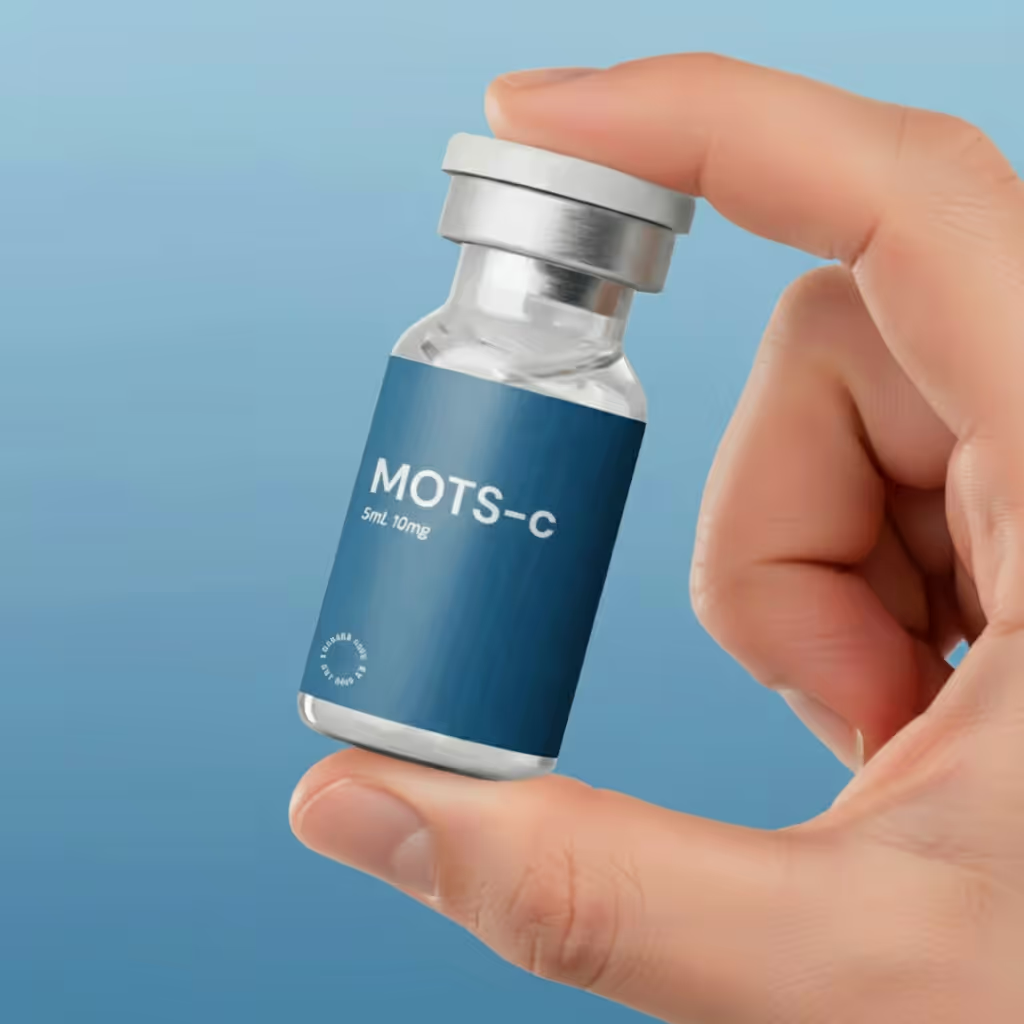
MOTS-c Dosage Calculator: Optimize Your Metabolism and Cellular Energy
Calculate your ideal MOTS-c dose with our dosing charts, reconstitution guide, and protocols for metabolism support and cellular energy optimization.
What is MOTS-c and How Does It Work?
MOTS-c (Mitochondrial Open Reading Frame of the 12S rRNA type-c) is a 16-amino acid peptide encoded by mitochondrial DNA rather than nuclear DNA. This makes it part of a unique class called mitochondrial-derived peptides (MDPs).
Your body naturally produces MOTS-c in response to exercise, fasting, and metabolic stress. It acts as a metabolic regulator, helping your cells adapt to energy demands and maintain metabolic balance.
How MOTS-c works: The peptide primarily activates AMPK (adenosine monophosphate-activated protein kinase), often called the body's "master metabolic switch." When AMPK is activated, it triggers a cascade of beneficial effects including improved glucose uptake, enhanced fat oxidation, and increased mitochondrial function.
What makes MOTS-c unique:
- Encoded by mitochondrial DNA (not nuclear DNA like most peptides)
- Acts as an "exercise mimetic" that simulates some benefits of physical activity
- Naturally increases during exercise and fasting
- Targets metabolic pathways at the cellular level
- Declines with age, potentially contributing to metabolic dysfunction
MOTS-c Benefits and Research Applications
MOTS-c has been studied for multiple metabolic and age-related applications:
| Application | Research Status | Key Findings |
|---|---|---|
| Insulin Sensitivity | Preclinical | Enhanced glucose uptake and insulin response |
| Obesity/Weight Management | Preclinical | Reduced fat accumulation in high-fat diet models |
| Exercise Performance | Preclinical | Improved endurance and exercise capacity in aged mice |
| Age-Related Decline | Preclinical | Countered physical decline and muscle loss with aging |
| Metabolic Syndrome | Preclinical | Improved multiple metabolic markers |
| Type 2 Diabetes | Early Research | May help regulate blood sugar levels |
MOTS-c Dosage Protocols
Dosing varies based on protocol type and treatment goals. There are two main approaches: intermittent dosing (every few days) and daily microdosing.
Intermittent Dosing Protocols (Most Common)
| Protocol | Dose | Frequency | Duration | Repeat |
|---|---|---|---|---|
| Standard 20-Day | 5 mg | Every 5 days | 20 days (4 doses) | 2-4x per year |
| Extended 30-Day | 10 mg | Once weekly | 4 weeks | Within 6 months |
| Intensive 4-6 Week | 5 mg | 3x per week | 4-6 weeks | As needed |
| Extended 10-Week | 10 mg | Once weekly | 10 weeks | 2x per year minimum |
Daily Microdosing Protocol (Alternative Approach)
Some protocols use smaller daily doses with gradual titration:
| Phase | Weeks | Daily Dose |
|---|---|---|
| Starting | 1-2 | 200 mcg |
| Titration 1 | 3-4 | 400 mcg |
| Titration 2 | 5-6 | 600 mcg |
| Titration 3 | 7-8 | 800 mcg |
| Target | 9-10+ | 1000 mcg (1 mg) |
How to Calculate Your MOTS-c Dose
Calculating your dose requires understanding the relationship between vial concentration, syringe units, and your target mg dose.
Step 1: Determine Your Vial Concentration
After reconstitution, your concentration depends on how much bacteriostatic water you add:
| Vial Size | Bacteriostatic Water | Final Concentration |
|---|---|---|
| 5 mg | 0.5 ml | 10 mg/ml |
| 5 mg | 1 ml | 5 mg/ml |
| 10 mg | 0.5 ml | 20 mg/ml |
| 10 mg | 1 ml | 10 mg/ml |
Step 2: Calculate Units on Your Syringe
Using a standard U-100 insulin syringe (100 units = 1 ml):
Formula: Units to draw = (Desired dose in mg / Concentration in mg/ml) x 100
Example calculations for 10 mg vial reconstituted with 1 ml (10 mg/ml):
| Desired Dose | Calculation | Units to Draw |
|---|---|---|
| 2.5 mg | (2.5 / 10) x 100 | 25 units |
| 5 mg | (5 / 10) x 100 | 50 units |
| 7.5 mg | (7.5 / 10) x 100 | 75 units |
| 10 mg | (10 / 10) x 100 | 100 units |
Example calculations for 10 mg vial reconstituted with 0.5 ml (20 mg/ml):
| Desired Dose | Calculation | Units to Draw |
|---|---|---|
| 2.5 mg | (2.5 / 20) x 100 | 12.5 units |
| 5 mg | (5 / 20) x 100 | 25 units |
| 7.5 mg | (7.5 / 20) x 100 | 37.5 units |
| 10 mg | (10 / 20) x 100 | 50 units |
Quick Reference Card
For a 10 mg vial reconstituted with 1 ml bacteriostatic water (10 mg/ml):
| Desired Dose | Units to Draw | Doses per Vial |
|---|---|---|
| 2.5 mg | 25 units | 4 doses |
| 5 mg | 50 units | 2 doses |
| 10 mg | 100 units | 1 dose |
Reconstitution: Mixing Your MOTS-c Properly
Proper reconstitution is especially critical for MOTS-c due to its instability. The peptide degrades rapidly once mixed.
What You Need
- MOTS-c lyophilized powder vial
- Bacteriostatic water (not sterile water or saline)
- Sterile syringes (one for mixing, separate ones for injections)
- Alcohol swabs
- Clean, flat work surface
Reconstitution Process
1. Prepare your workspace: Clean your surface and wash your hands thoroughly. Gather all supplies before starting.
2. Clean the vial tops: Wipe the rubber stoppers of both the MOTS-c vial and bacteriostatic water with alcohol swabs. Allow to air dry.
3. Draw the bacteriostatic water: Using a sterile syringe, draw your calculated amount of bacteriostatic water.
4. Add water to the MOTS-c vial: Insert the needle at an angle, aiming the stream at the glass wall rather than directly onto the powder. Add water slowly.
5. Allow to dissolve: Let the vial sit for 1-2 minutes. Gently swirl or roll the vial between your palms. Never shake vigorously as this can cause foaming and damage the peptide.
6. Inspect the solution: The reconstituted MOTS-c should be clear and colorless. Do not use if cloudy, discolored, or containing visible particles.
Critical Storage Information
MOTS-c is highly unstable compared to other peptides. Proper storage is essential:
- Lyophilized (powder): Store frozen at -4°F (-20°C) or below. Stable for up to 3 years frozen, 2 years refrigerated.
- Reconstituted: Refrigerate at 36-46°F (2-8°C) immediately. Use within 7 days for best potency.
- Room temperature warning: MOTS-c loses approximately 25% activity after just 24 hours at refrigerator temperature, and 85-90% activity after 2-3 hours at room temperature.
- Light sensitive: Protect from light at all times.
- Aliquoting option: For longer storage, prepare single-use aliquots and freeze at -4°F (-20°C). Avoid repeated freeze-thaw cycles.
Administration Protocol
Timing Your Injection
Optimal timing: Morning administration is preferred, ideally before exercise or fasted cardio. This aligns with MOTS-c's natural production patterns during fasting and physical activity.
Timing guidelines:
- Inject in the morning on an empty stomach when possible
- 30-60 minutes before fasted cardio enhances effects
- On non-training days, morning injection still recommended
- Maintain consistent timing for best results
Injection Technique
MOTS-c is administered via subcutaneous injection into the fatty tissue just beneath the skin.
Preferred injection sites:
- Abdomen (2 inches away from navel)
- Front or outer thigh
- Back of upper arm
Site rotation: Rotate injection sites with each dose to prevent tissue irritation and lipohypertrophy. This is especially important with MOTS-c due to potential injection site reactions.
Schedule Options
Standard 20-Day Protocol:
- 5 mg every 5 days for 20 days (4 injections total)
- Repeat cycle 2-4 times per year
Extended 30-Day Protocol:
- 10 mg once weekly for 4 weeks
- Repeat within 6 months
Intensive Protocol:
- 5 mg three times weekly for 4-6 weeks
- Use for more aggressive metabolic goals
Treatment Phases and What to Expect
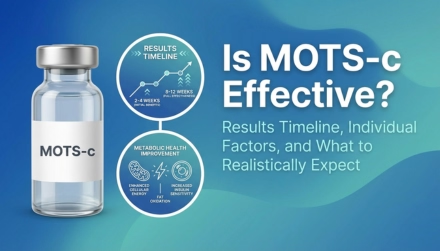
Weeks 1-2: Initial Metabolic Activation
Your body is beginning to respond to AMPK activation. Benefits are subtle but starting.
What to expect:
- Possible injection site reactions (mild, temporary)
- Subtle energy improvements
- Enhanced mental clarity in some users
- No dramatic changes yet
Weeks 3-6: Metabolic Optimization
Benefits become more noticeable as mitochondrial biogenesis accelerates.
What to expect:
- Noticeable energy improvements
- Better glucose control
- Enhanced endurance during exercise
- Improved recovery from workouts
Weeks 6-12+: Full Metabolic Benefits
Maximum benefits typically manifest with consistent use over time.
What to expect:
- Significant metabolic improvements
- Enhanced exercise performance
- Better body composition
- Sustained energy throughout the day
Cycle Duration and Frequency
Most protocols run 4-6 weeks, followed by a break period. Cycles can be repeated 2-4 times per year depending on the protocol used.
Signs Your Dose May Need Adjustment
Signs Your Dose May Be Too Low
- No improvement in energy levels after 3-4 weeks
- Minimal changes in exercise tolerance
- No noticeable metabolic effects
Signs Your Dose May Be Too High
- Persistent injection site reactions
- Unusual fatigue or lethargy
- Gastrointestinal disturbances
- Headaches
Most Common Side Effects
MOTS-c is generally well-tolerated based on preclinical studies. Reported side effects include:
- Injection site reactions (redness, swelling, itching)
- Mild fatigue during initial adjustment
- Appetite changes (suppression or increase)
- Headache (rare)
- Muscle cramping (rare)
How long until I see results?
Energy and mental clarity improvements may appear within 1-2 weeks. Metabolic and body composition changes typically develop over 4-8 weeks of consistent use.
Should I take MOTS-c on an empty stomach?
Yes, morning administration on an empty stomach is preferred. This mimics natural MOTS-c production during fasting.
Can I take MOTS-c every day?
Some protocols use daily microdosing (200-1000 mcg), while others use larger intermittent doses (5-10 mg every few days). Both approaches have been used.
What if I miss a dose?
Simply take your next scheduled dose. Don't double up.
Is MOTS-c banned in sports?
Yes, MOTS-c is on WADA's Prohibited List under category S2 (peptide hormones, growth factors, and related substances). Athletes should avoid use.
Can I combine MOTS-c with metformin?
Both activate AMPK through different mechanisms. Consult your healthcare provider before combining, as effects may be additive.
Factors That Affect Your Response
Lifestyle Synergies
Exercise: MOTS-c is considered an "exercise mimetic" and works synergistically with physical activity. Combining MOTS-c with regular exercise amplifies benefits.
Fasting: Intermittent fasting or caloric restriction may synergize with MOTS-c's AMPK-mediated effects, as both activate similar metabolic pathways.
Diet: A protein-adequate, nutrient-dense diet supports the metabolic improvements MOTS-c provides.
Individual Factors
Age: MOTS-c levels naturally decline with age. Older individuals may experience more pronounced benefits from supplementation.
Baseline metabolic health: Those with metabolic dysfunction (obesity, insulin resistance) may see greater improvements than metabolically healthy individuals.
Activity level: Active individuals may synergize better with MOTS-c's exercise-mimetic effects.
MOTS-c Stacking Options
MOTS-c can be combined with other peptides for enhanced effects. Always consult with a healthcare provider before combining therapies.
| Stack | Purpose | Protocol Notes |
|---|---|---|
| MOTS-c + SS-31 | Enhanced mitochondrial support | SS-31 first to "prep" mitochondria, then MOTS-c |
| MOTS-c + CJC-1295/Ipamorelin | Metabolism + GH optimization | MOTS-c morning, CJC/Ipa at bedtime |
| MOTS-c + BPC-157 | Metabolism + tissue healing | Can be used concurrently |
| MOTS-c + Fasting Protocol | Amplified AMPK activation | Synergistic metabolic effects |
MOTS-c vs Other Metabolic Peptides
| Feature | MOTS-c | AOD-9604 | Tesamorelin |
|---|---|---|---|
| Primary Mechanism | AMPK activation | Fat metabolism fragment | GHRH analog |
| Main Target | Cellular energy/metabolism | Fat cells | Growth hormone release |
| Dosing Frequency | Every 5 days to 3x weekly | Daily | Daily |
| Typical Dose | 5-10 mg | 300-600 mcg | 1-2 mg |
| FDA Status | Investigational | Investigational | FDA Approved (HIV lipodystrophy) |
| Human Trial Data | Limited | Limited | Extensive |
| Exercise Mimetic | Yes | No | No |
Working With Your Healthcare Provider
MOTS-c therapy requires medical supervision. Your provider should:
- Evaluate your medical history and metabolic health status
- Determine if MOTS-c is appropriate for your situation
- Help select the right dosing protocol for your goals
- Monitor your progress and adjust as needed
- Screen for contraindications and potential interactions
Be proactive in communicating with your provider about your response, any side effects, and your treatment goals.
Important Safety Information
- MOTS-c has not completed human clinical trials and remains investigational
- Compounded MOTS-c is not FDA-reviewed for safety, quality, or efficacy
- MOTS-c is prohibited by WADA for competitive athletes
- The peptide is highly unstable; proper storage is critical
- Long-term safety data in humans is not available
- Do not use if pregnant or breastfeeding
- Report any unusual symptoms to your healthcare provider promptly
- Never share your medication with others
This information is for educational purposes only and does not constitute medical advice. Always consult with a licensed healthcare provider before starting any peptide therapy. Individual results vary based on numerous factors including age, metabolic health, and adherence to treatment protocols.