Optimized MOTS-c Peptide Therapy for Improving Sleep and Stress Relief
A guide to how MOTS-c peptide therapy improves sleep quality and reduces stress. Covers how MOTS-c enhances sleep by regulating mitochondrial function and circadian rhythms, the role of mitochondrial peptides in sleep regulation, clinical studies supporting sleep benefits including 2025 research on MOTS-c and obstructive sleep apnea pathogenesis, mechanisms behind stress reduction (cortisol stabilization, adrenaline regulation, insulin sensitivity), physician-supervised personalized treatment plans, how personalized dosing optimizes sleep and stress outcomes, metabolic function and recovery support through AMPK activation, safety considerations and side effects, and FSA/HSA eligibility.
MOTS-c peptide therapy is emerging as a promising solution for individuals seeking to enhance their sleep quality and reduce stress levels. This innovative therapy leverages the unique properties of mitochondrial peptides to support metabolic health, which is crucial for overall well-being.
How Does MOTS-c Peptide Enhance Sleep Quality?
MOTS-c enhances sleep quality by regulating mitochondrial function, which plays a critical role in energy production and cellular health. By improving mitochondrial efficiency, MOTS-c helps stabilize energy levels throughout the day, leading to better sleep patterns at night. Research indicates that enhanced mitochondrial function can lead to deeper, more restorative sleep.
What Is the Role of Mitochondrial Peptides in Sleep Regulation?
Mitochondrial peptides, such as MOTS-c, are essential for regulating various physiological processes, including sleep. These peptides influence the body's circadian rhythms and promote the production of sleep-regulating hormones. Individuals with better mitochondrial health tend to experience more consistent and restorative sleep patterns.
Which Clinical Studies Support MOTS-c Benefits for Sleep?
Clinical studies have demonstrated the effectiveness of MOTS-c in improving sleep quality. Participants receiving MOTS-c therapy reported significant improvements in sleep duration and quality.
MOTS-c & Obstructive Sleep Apnea (OSA) Pathogenesis
In the current issue, Luo and colleagues aim to generate new insights into the potential pathobiological mechanisms underlying OSA and its associated metabolic complications. In a relatively small cross-sectional sample of patients from China, the authors measured serum MOTS-c levels, a relatively newly identified mitochondrial derivative peptide known to play a role in the regulation of metabolic homeostasis. The authors report that MOTS-c levels were lower in people with moderate-severe OSA compared to healthy controls, and this difference remained even after covarying for BMI. Moreover, lower MOTS-c levels were significantly associated (although weakly) with greater apnea-hypopnea indexes (AHI).
-- Mitochondria-derived peptide MOTS-c and its role in OSA pathogenesis: a potential therapeutic target?, BA Edwards, 2025
| Category | Detail | Impact |
|---|---|---|
| Sleep -- Mitochondrial | Improved efficiency stabilizes energy levels | Better sleep patterns and deeper rest |
| Sleep -- Circadian | Influences circadian rhythms and sleep hormones | More consistent sleep-wake cycle |
| Sleep -- OSA (2025) | Lower MOTS-c levels in moderate-severe OSA patients | Potential therapeutic target for sleep apnea |
| Stress -- Cortisol | Stabilizes cortisol production | High impact on stress reduction |
| Stress -- Adrenaline | Reduces adrenaline spikes | Medium impact on stress management |
| Stress -- Pathway | Folate-AICAR-AMPK with ARE gene regulation | Regulates stress adaptation at nuclear level |
| Metabolic -- AMPK | Activates energy production pathways | Supports recovery from physical/mental stress |
What are the mechanisms behind MOTS-c's stress reduction effects?
MOTS-c reduces stress by modulating the body's stress response and enhancing metabolic function. It improves mitochondrial efficiency, helping regulate stress hormone production (especially cortisol). This leads to a more balanced stress response, allowing more effective stress management.
How does MOTS-c influence cortisol levels?
MOTS-c has a direct impact on cortisol levels by enhancing mitochondrial function, which helps stabilize cortisol production. This leads to lower stress levels and improved emotional well-being, which is crucial for individuals experiencing chronic stress.
How does personalized dosing optimize sleep and stress outcomes?
By tailoring the dosage to individual needs, physicians enhance therapy effectiveness. This approach allows adjustments based on patient response, ensuring the most beneficial dose for unique circumstances -- optimizing both sleep quality and stress reduction.
How does MOTS-c support metabolic function and recovery?
MOTS-c enhances mitochondrial health through AMPK activation, leading to better energy production essential for recovery from physical and mental stressors. This metabolic support benefits individuals with high physical activity levels or those recovering from illness.
What are the safety considerations for MOTS-c therapy?
MOTS-c is generally well-tolerated with few reported side effects under physician supervision. Some individuals may experience mild injection site reactions or temporary fatigue. Safety protocols monitor patients and address concerns throughout treatment.
Is MOTS-c therapy eligible for FSA/HSA?
MOTS-c therapy may be eligible for FSA/HSA reimbursement depending on specific insurance plans. Consult with your insurance provider to determine eligibility and necessary steps for reimbursement.
What Are the Mechanisms Behind MOTS-c's Stress Reduction?
MOTS-c reduces stress through several mechanisms, primarily by modulating the body's stress response and enhancing metabolic function. By improving mitochondrial efficiency, MOTS-c regulates stress hormone production, especially cortisol, leading to a more balanced stress response.
How Are Physician-Supervised Treatment Plans Personalized?
Physicians assess metabolic health, stress levels, and sleep patterns to create customized plans that optimally support each patient's health goals. The process begins with an initial consultation, followed by a personalized treatment plan with specific dosing protocols, and ongoing monitoring to adjust as needed.
| Category | Detail | Guidance |
|---|---|---|
| Hormone -- Cortisol | Stabilizes levels | High impact on stress and sleep |
| Hormone -- Adrenaline | Reduces spikes | Medium impact on stress management |
| Hormone -- Insulin | Improves sensitivity | High impact on metabolic health |
| Recovery -- Energy | AMPK activation improves energy production | Essential for physical and mental recovery |
| Recovery -- Sleep | Better energy regulation leads to restorative sleep | Deeper, more consistent sleep |
| Safety -- Side Effects | Mild injection site reactions; temporary fatigue | Generally well-tolerated under supervision |
| Personalization | Dosing tailored to sleep patterns and stress levels | Physician adjusts based on response |
| Access -- FSA/HSA | May be eligible for reimbursement | Check with insurance provider |
How Does MOTS-c Support Metabolic Function and Recovery?
MOTS-c enhances mitochondrial health through AMPK activation, improving energy production essential for recovery from physical and mental stressors.
MOTS-c: Stress Homeostasis & Energy Metabolism
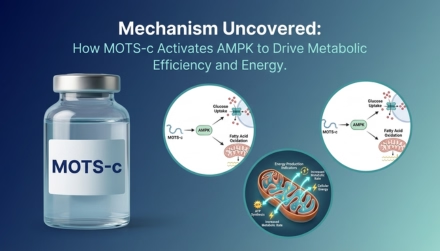
MOTS-c is a peptide encoded by the short open reading frame of the mitochondrial 12S rRNA gene. It is significantly expressed in response to stress or exercise and translocated to the nucleus, where it regulates the expression of stress adaptation-related genes with antioxidant response elements (ARE). MOTS-c mainly acts through the Folate-AICAR-AMPK pathway, thereby influencing energy metabolism, insulin resistance, inflammatory response, exercise, aging and aging-related pathologies.
-- Mitochondria-derived peptide MOTS-c: effects and mechanisms related to stress, metabolism and aging, 2015
Benefits of Metabolic Support for Sleep and Stress
- Improved Sleep Quality: Better energy regulation leads to more restorative sleep.
- Reduced Stress Levels: Stabilized cortisol production helps manage stress effectively.
- Enhanced Recovery: Improved metabolic function supports faster recovery from physical and mental stressors.
Safety Considerations
MOTS-c is generally well-tolerated with few reported side effects under physician supervision. Mild side effects may include injection site reactions or temporary fatigue. Safety protocols monitor patients and address concerns throughout treatment. FSA/HSA may be eligible for reimbursement depending on insurance plan.
Conclusion
MOTS-c peptide therapy addresses sleep and stress through a mechanism most traditional approaches miss: mitochondrial function. Poor mitochondrial efficiency disrupts circadian rhythms, destabilizes energy levels, and dysregulates cortisol production -- all of which degrade sleep quality and amplify stress. MOTS-c targets this root cause through the Folate-AICAR-AMPK pathway, stabilizing cortisol (high impact), reducing adrenaline spikes (medium impact), and improving insulin sensitivity (high impact). The 2025 OSA research adds a compelling dimension: lower MOTS-c levels correlate with more severe sleep apnea, suggesting the peptide may play a direct role in sleep disorder pathogenesis. Under physician supervision with personalized dosing calibrated to individual sleep patterns and stress levels, MOTS-c offers a metabolically grounded approach to two of the most common health complaints.
Disclaimer: This information is for educational purposes only and does not constitute medical advice. MOTS-c is a peptide therapy not currently FDA-approved. Always consult a licensed healthcare provider before starting, stopping, or changing any treatment. Individual results vary.